NOVA Classification Explained: Complete Guide to Ultra-Processed Foods | 2026 Update
If you want a simple way to understand how much a food has been processed, NOVA is the system you need. This four-group classification separates foods from Group 1 (minimally processed) to Group 4 (ultra-processed), helping you identify foods that are closer to their natural form and those made mostly from industrial ingredients and additives.
Whether you are choosing breakfast cereals, snacks, drinks, or ready meals, NOVA can help you quickly identify how processed a product is. This guide explains the four NOVA groups, how the system works, and how to use it for healthier food choices.
What Is NOVA?
NOVA is a food classification system that groups foods according to the extent and purpose of industrial processing rather than nutrient content alone. It is the most commonly used framework for describing ultra-processed foods, and it is widely used in nutrition research and public health discussions.
Unlike Nutri-Score, which focuses on nutritional quality, NOVA focuses on processing level. It helps consumers understand whether a product is a whole food, a processed ingredient, or an ultra-processed product made from refined substances, flavors, colors, and additives.
The Four NOVA Groups Explained
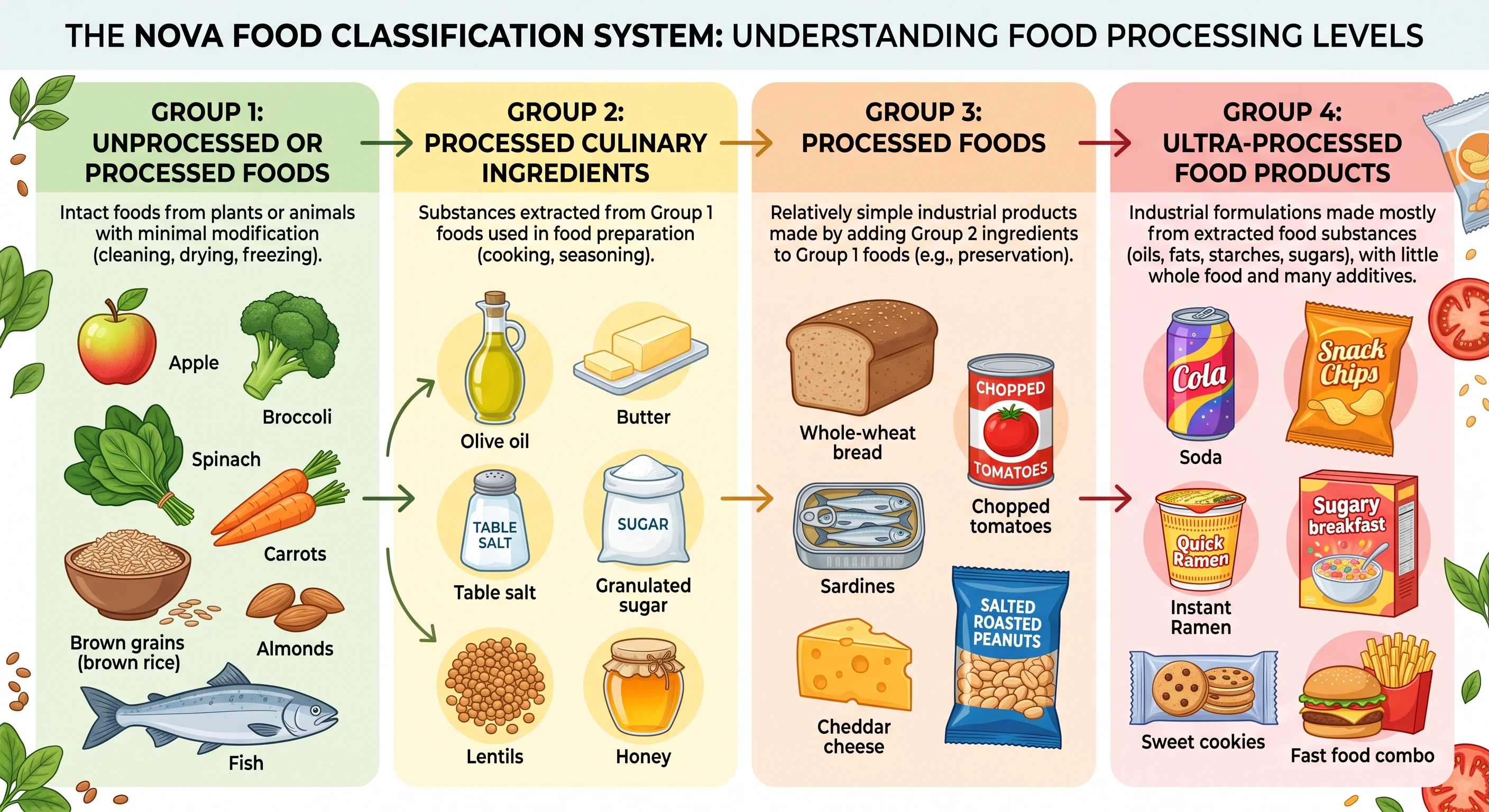
NOVA classifies foods into four categories based on how much they have been processed. Here is a simple breakdown:
| Group | Name | Meaning |
| 1 | Unprocessed or Minimally Processed Foods | Natural foods altered only by simple processes like cleaning, freezing, pasteurizing, or drying |
| 2 | Processed Culinary Ingredients | Ingredients extracted from Group 1 foods or nature, used to cook and season foods |
| 3 | Processed Foods | Foods made by adding salt, oil, sugar, or other Group 2 ingredients to Group 1 foods |
| 4 | Ultra-Processed Foods | Industrial formulations made mostly from refined ingredients, additives, and cosmetic substances |
Group 1 Foods
These are foods in their natural state or foods that have only been slightly changed to make them safer or easier to store. Examples include fresh fruits, vegetables, eggs, plain milk, rice, lentils, fresh meat, and frozen vegetables without additives.
These foods are usually the foundation of a healthy diet because they keep most of their natural structure and nutritional value. They are typically the best choice for regular meals and snacks.
Group 2 Ingredients
This group includes ingredients extracted from Group 1 foods or from nature and used in cooking. Examples include oil, butter, sugar, salt, and flour.
These ingredients are not usually eaten alone in large amounts. They are generally used to prepare, season, or preserve foods from the other groups.
Group 3 Foods
Processed foods are made by adding salt, sugar, oil, or vinegar to Group 1 foods. Common examples include canned vegetables, cheese, fresh bread, salted nuts, and fruit in syrup.
These foods can still be part of a balanced diet, but they are usually higher in salt, sugar, or fat than minimally processed foods. They are often eaten in moderation alongside other foods.
Group 4 Foods
Ultra-processed foods are industrial products made mostly from substances extracted from foods or synthesized in factories. They often contain flavorings, colorings, emulsifiers, sweeteners, and other additives designed to make the product taste better, last longer, or look more appealing.
Examples include soft drinks, packaged snacks, instant noodles, sugary cereals, frozen pizza, candy, and many ready-to-eat convenience foods. These products are often highly palatable but usually contain little intact food structure.
Why NOVA Matters
NOVA matters because the level of processing can affect diet quality, eating behavior, and long-term health. Ultra-processed foods are often easy to overeat because they are engineered to be convenient, tasty, and highly rewarding.
The classification also helps researchers and consumers discuss food in a clearer way. Instead of only looking at calories or nutrients, NOVA highlights how industrial processing changes the food itself.
How to Use NOVA
NOVA works best as a practical guide when shopping or planning meals. It is especially useful for comparing packaged products and deciding which foods should be everyday staples and which should be occasional choices.
Key usage tips:
- Choose more Group 1 foods for everyday meals.
- Use Group 2 ingredients in small amounts for cooking.
- Limit Group 4 products when possible.
- Read ingredient lists carefully, especially for packaged foods with many additives.
- Use NOVA together with Nutri-Score or Eco-Score for a fuller picture.
Examples of NOVA Foods
Here are simple examples to help you identify each group:
- Group 1: apples, oats, eggs, plain yogurt, fresh chicken.
- Group 2: olive oil, sugar, salt, butter.
- Group 3: cheese, canned beans, smoked fish, fresh bread.
- Group 4: soda, chips, instant soup, breakfast bars, fast food items.
Limitations and Important Notes
NOVA is useful, but it does not tell the whole story about nutrition. A food can be ultra-processed and still fit into some dietary patterns, while a processed food can still be nutritious depending on ingredients and portion size.
The system also does not measure exact nutrient levels, vitamin content, or environmental impact. That is why it is best used alongside other labels and nutrition information, not as the only decision-making tool.
Conclusion
NOVA makes it easier to understand how much a food has been processed and whether it belongs to a more natural or more industrial category. By focusing on processing rather than only nutrients, it gives consumers a different lens for evaluating food quality.
Using NOVA alongside labels like Nutri-Score and Eco-Score can help you make smarter, more balanced food choices. In practice, the more often you choose Group 1 foods and the less often you rely on Group 4 products, the easier it becomes to build a healthier diet.
References
1. Ultra-processed foods: what they are and how to identify them
2. Ultra-processed foods | Food Standards Agency
3. Ultra-Processed Foods: Definitions and Policy Issues
4. What is ultra-processed food and what does it mean for my health?
5. Ultra-processed foods - British Nutrition Foundation
6. What Ultra-Processed Foods Are (and Why They're So Bad for You)